


The symbolic systems approach and AI planning work great for applications that have a limited number of patterns. Image a program that helps you complete your tax return. The IRS provides a limited number of forms and a collection of rules for reporting tax-relevant data. Combine the forms and instructions with the capability to crunch numbers and some heuristic reasoning, and you have a tax program that can step you through the process. With heuristic reasoning, you can limit the number of patterns; for example, if you earned money from an employer, you complete a W-2 form. If you earned money as a sole proprietor, you complete Schedule C.
Machine Learning in a Symbolic AI System
The limitation with this approach is that the database is difficult to manage, especially when rules and patterns change. For example, malware (viruses, spyware, computer worms and so forth) evolve too quickly for anti-malware companies to manually update their databases. Likewise, digital personal assistants, such as Siri and Alexa, need to constantly adapt to unfamiliar requests from their owners.
To overcome these limitations, early AI researchers started to wonder whether computers could be programmed to learn new patterns. Their curiosity led to the birth of machine learning. The wanted computers to do things they weren't specifically programmed to do.
Machine learning got its start very shortly after the first AI conference. In 1959, AI researcher Arthur Samuel created a program that could play checkers. This program was different. It was designed to play against itself so it could learn how to improve. It learned new strategies from each game it played and after a short period of time began to consistently beat its own programmer.
A key advantage of machine learning is that it doesn't require an expert to create symbolic patterns and list out all the possible responses to a question or statement. On its own, the machine creates and maintains the list, identifying patterns and adding them to its database.
Machine Learning in Artificial Intelligence
Machine learning still qualifies as weak AI, because the computer doesn't understand what's being said; it only matches symbols and identifies patterns. The big difference is that instead of having an expert provide the patterns, the computer identifies patterns in the data. Over time, the computer becomes "smarter."
Machine learning has become one of the fastest growing areas in AI primarily because the cost of data storage and processing has dropped dramatically. We are currently in the era of data science and big data. These are extremely large data sets that can be computer analyzed to reveal patterns, trends and associations. Organizations are collecting vast amounts of data. The big challenge is to figure out what to do with all this data. Answering that challenge is machine learning, which can identify patterns even when you really don't know what you're looking for. In a sense, machine learning enables computers to find out what's inside your data and let you know what it found.
Machine learning moves past the limitations with symbolic systems. Instead of memorizing symbols a computer system uses machine learning algorithms to create models of abstract concepts. It detects statistical patterns by using machine learning algorithms on massive amounts of data.
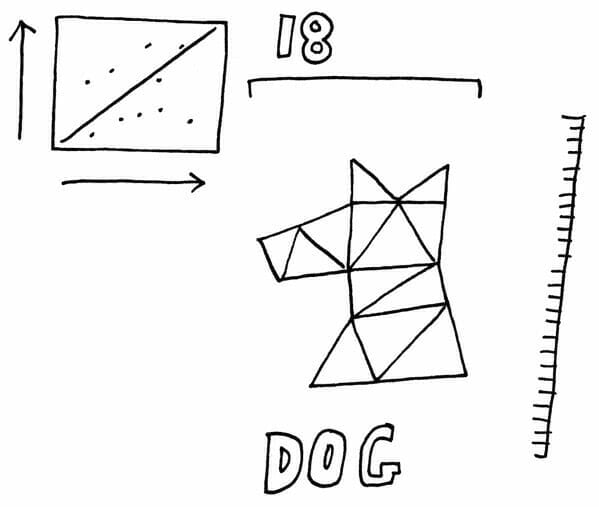
So a machine learning algorithm looks at the eight pictures of different dogs. Then it breaks down these pictures into individual dots or pixels. Then it looks at these pixels to detect patterns. Maybe it sees a pattern all of these animals as having hair. Maybe it sees a pattern for noses or ears. It could even see a pattern that humans are unable to perceive. Collectively, the patterns create what might be considered a statistical expression of “dogness.”
Sometimes humans can help machines learn. We can feed the machine millions of pictures that we’ve already determined contained dogs, so the machine doesn’t have to worry about excluding images of cats, horses or airplanes. This is called supervised learning, and the data, consisting of the label “dog” and the millions of pictures of dogs is called a training set. Using the training set, a human being is teaching the machine that all of the patterns it identifies are characteristics of “dog.”
Machines can also learn completely on their own. We just feed massive amounts of data into the machine and let it find its own patterns. This is called unsupervised learning.
Imagine a machine examining all the pictures of people on your smart phone (or this website). It might not know if someone was your husband, wife, boyfriend or girlfriend. But it could create clusters of people that it sees are closest to you.
Frequently Asked Questions
What is the symbolic approach in AI?
The symbolic approach in AI, often referred to as good old-fashioned AI (GOFAI), relies on high-level symbolic representation and rules to solve problems. This involves using a set of predefined rules for representation of knowledge and perform problem-solving.
What are some examples of AI applications using symbolic AI?
Examples include expert systems used in medical diagnosis, rule-based financial forecasting systems, and intelligent systems for legal reasoning. These applications leverage a symbolic system to represent knowledge and apply a set of rules to solve complex problems within specific domains.
What role does knowledge representation play in symbolic AI?
Knowledge representation is crucial in symbolic AI as it involves encoding information and rules in a structured manner that a computer system can use to perform reasoning and inference. This structured representation allows symbolic AI to solve problems and make decisions based on a defined set of rules and knowledge base.
How are expert systems related to symbolic AI?
Expert systems are a type of symbolic AI that apply structured knowledge and rule-based inference to mimic human expertise in specific domains. These systems use a predefined set of rules and a knowledge base to provide solutions and recommendations for complex problems.
Can symbolic systems approach be integrated with machine learning and deep learning?
Yes, hybrid AI systems combine symbolic systems approach with machine learning and deep learning techniques to leverage the strengths of both. This integration allows the system to use symbolic rules for knowledge representation and reasoning, while also learning patterns and improving performance from training data.
What are the advantages and limitations of symbolic AI?
The advantages of symbolic AI include human-readable reasoning, clear knowledge representation, and strong rule-based decision-making. However, its limitations lie in its reliance on predefined rules, which can be inflexible and labor-intensive to encode. Additionally, symbolic AI might struggle with tasks requiring pattern recognition and learning from data, where neural networks excel.
How does symbolic AI approach to problem-solving work?
Symbolic AI approaches problem-solving by encoding knowledge into a structured format and applying a set of symbolic rules to infer solutions. These systems can perform logical reasoning and make decisions following the rules encoded in their knowledge base, providing transparent and understandable solutions.

This is my weekly newsletter that I call The Deep End because I want to go deeper than results you’ll see from searches or LLMs. Each week I’ll go deep to explain a topic that’s relevant to people who work with technology. I’ll be posting about artificial intelligence, data science, and data ethics.
This newsletter is 100% human written 💪 (* aside from a quick run through grammar and spell check).
More sources
- https://en.wikipedia.org/wiki/Symbolic_artificial_intelligence
- https://www.inbenta.com/articles/symbolic-ai-vs-machine-learning-in-natural-language-processing/
- https://bdtechtalks.com/2019/11/18/what-is-symbolic-artificial-intelligence/
- https://www.larksuite.com/en_us/topics/ai-glossary/symbolic-artificial-intelligence
- https://machinemindscape.com/artificial-intelligence-to-deep-learning-history-concepts/
- https://towardsdatascience.com/rise-and-fall-of-symbolic-ai-6b7abd2420f2
- https://pmehub.ma/blog/details/From-Chess-Champs-to-Chatbots:-The-Fascinating-Evolution-of-AI-and-Machine-Learning-1709651182244